Buyers Guide
Becoming a homeowner is an exciting milestone, though it often brings uncertainties and unfamiliar steps for first-time buyers. BayBonds offers all the guidance and information you need when applying for a home loan.
Types Of Loans
All major banks typically offer a range of loan options. Bay Bonds will assist you in selecting the loan that best suits your needs and guide you through the application process. Below is a brief overview of the different types of loans available.
Ordinary Loans
A loan granted to an applicant for the purpose of purchasing immovable property, whether it consists of existing buildings and fixtures or vacant land.
Ordinary Loans: Further Advance
When the owner of a property, already bonded as security for an existing loan, requires additional financing, the bank may grant a further advance, provided the property’s value offers sufficient security for the increased loan amount. The client is generally free to use the funds from this further advance at their own discretion.
Building Loans
A loan provided to an applicant for the construction of a building on a vacant stand, typically as part of a full building package. The loan is subject to a mortgage bond being registered in the bank’s favour. Once the bond is registered, the bank releases funds to the client or their contractor in stages, aligned with the progress of construction—for example, after completion of the land purchase, foundations, roof height, and final finishes.
Building Loans: Further Advance
When the owner of a property that is already bonded for an existing loan needs additional financing to build new structures, or to make alterations, improvements, or additions, the bank may grant a further advance, provided that the property’s expected value after completion offers sufficient security.
Depending on the available security under the existing mortgage bond, the bank may release the full amount upfront, disburse funds progressively as the building work advances, or retain a portion subject to certain conditions.
If the margin between the loan balance and the bond value is adequate, the advance can be granted; if not, an additional mortgage bond will need to be registered.

Client Types
Individual
Natural Person over the age of 18 years.
Joint Account
Any Natural Persons over the age of 18 years who wish to purchase a property in their joint names.
Married Couples
In Community of Property: Bond must be registered in both names.
Out of Community of Property: Both partners have full contractual power. Bond can be in both names or either name provided. Each qualifies in their individual capacity.
Foreign Law Marriages: Marriage partners are viewed according to law of country where they are married.
Customary Law: Not recognised as a legal marriage (by the banks) unless it has been registered at Home Affairs (they need proof).
Religious (Hindu or Muslim): Not recognised as a legal marriage unless a magistrate or commissioner has conducted it.
Minor: To be assisted by both parents or guardians.
Companies
Sole Proprietorship – A simple business owned and run by one individual with no separation between personal and business liability.
Partnership – A business formed by two or more people who share profits, responsibilities, and personal liability.
Private Company (Pty) Ltd – A separate legal entity with limited liability, privately owned shares, and minimal regulatory requirements.
Public Company (Ltd) – A company that may offer shares to the public and is subject to stricter governance and reporting rules.
Non-Profit Company (NPC) – An entity established for public benefit or social purposes that cannot distribute profits to its members or directors.
Close Corporation (CC) – A simplified legal entity with limited liability, run by up to 10 members, though no longer available for new registrations.
Personal Liability Company (Inc.) – A company where directors are jointly and severally liable for debts incurred while they are in office, commonly used by professionals.
Informal Body: Recognised churches and associations may buy property – obtain latest set of financials and resolution from last meeting approving purchase of property.
Trusts
Inter vivos trust (IT): A trust created by a founder during their lifetime for managing assets or estate planning.
Testamentary trust (MT – Mortis Causa): A trust established in terms of a will, coming into effect only after the testator’s death.

Definition On Different Entities
Trusts (Starts With "MT" or "IT")
A Trust is formed by a legal arrangement in terms of a Trust Deed, whereby the assets of a person (the founder or settlor) are placed under the control of trustees, who administer the assets for the benefit of the trust beneficiaries.
It is essential that the Trust Deed be obtained and reviewed if the Trust is providing security, particularly in the case of a suretyship. The Master of the High Court assigns a Trust number, typically consisting of up to 8 digits, often including 4 digits indicating the year of registration.
A Trust is not a separate legal entity, but a legal arrangement. It functions through its trustees and continues to exist despite changes in trustees. Unless the Trust Deed provides otherwise, trustees must act jointly when exercising powers.
To bind a Trust, it is essential that the Trust Deed is obtained and reviewed to determine the powers of the trustees. If a Trust applies for a loan, provides security, or enters into a suretyship, a resolution signed by all trustees authorizing the action must be obtained either prior to or at the time of signing the security documents.
Since a Trust is not a separate legal entity, all documents intended to bind the Trust should be completed and signed by all trustees in their capacity as trustees.
Sole Proprietorship
What it is: A business owned and run by one individual.
Founding Document: None (no formal registration with CIPC).
Directors: Not applicable.
Shareholders/Members: Only the owner (one person).
Unique Characteristics:
- Easiest and cheapest to set up.
- No separation between personal and business liability.
- Not a separate legal entity.
The contractual capacity vests in the owner, who acts on behalf of the business in their personal capacity.
When dealing with a Sole Proprietor, the same documentation is required as when dealing with a natural person.
Partnerships
What it is: Two or more people running a business together.
Founding Document: Partnership Agreement (optional but recommended).
Directors: Not applicable.
Partners/Members: Minimum 2; maximum usually up to 20 (common practice).
Unique Characteristics:
- Partners share profits and liabilities.
- Not a separate legal entity – partners are personally liable.
- Flexible internal arrangements.
The Bank requires that all partners sign any transaction documentation.
All partners are jointly and severally liable for the partnership’s obligations. If the partnership is declared insolvent, the private estates of the partners may also be sequestrated.
When dealing with a partnership, the same documentation is required for each partner as when dealing with a natural person.
Private Company (Pty) Ltd
What it is: The most common business entity for SMEs and professional practices.
Founding Document: Memorandum of Incorporation (MOI); Notice of Incorporation.
Directors: Minimum 1 director.
Shareholders: Minimum 1 shareholder.
Unique Characteristics:
- Separate legal entity with limited liability.
- Cannot offer shares to the public.
- Ownership can be easily transferred via share sales.
Public Company (Ltd)
What it is: Company that may offer shares to the public or list on the JSE.
Founding Document: Memorandum of Incorporation (MOI); Notice of Incorporation.
Directors: Minimum 3 directors.
Shareholders: Minimum 1 shareholder.
Unique Characteristics:
- Can raise capital publicly.
- Subject to stricter audits and reporting.
- Ideal for large enterprises.
Non-Profit Company (NPC)
What it is: Entity formed for a public benefit or cultural/social cause.
Founding Document: MOI (with specific non-profit provisions).
Directors: Minimum 3 directors.
Members: Optional — NPCs may have members or be memberless.
Unique Characteristics:
- Surplus funds must be used for its objectives.
- Cannot distribute profits to members or directors.
- Often used for charities, organisations, associations.
Close Corporation (CC)
(No longer allowed to register new CCs, but existing CCs may continue operating.)
Founding Document: Founding Statement (CK1).
Members: Minimum 1; maximum 10 members.
Directors: Not applicable — members manage the CC.
Unique Characteristics:
- Separate legal entity.
- Members hold “member interests” instead of shares.
- Simpler administration than companies.
Due to provisions of the Close Corporations Act, the Bank requires that all members sign security documents, often personally guaranteeing the facilities and providing unlimited cessions of loan accounts.
NB: Certified copies of the Founding Statement (CK1) and Certificate of Incorporation are required.
State-Owned Company (SOC Ltd)
What it is: Company owned by the government.
Founding Document: MOI.
Directors: As per MOI — usually multiple directors appointed by the state.
Shareholders: Government departments or state entities.
Unique Characteristics:
- Operates commercially but under government control.
- Subject to PFMA and Companies Act.
Personal Liability Company (Inc.)
What it is: Often used by professional practices (attorneys, accountants).
Founding Document: MOI.
Directors: Minimum 1 director.
Shareholders: Minimum 1 shareholder.
Unique Characteristics:
- Directors are jointly and severally liable for debts incurred during their tenure.
- Suitable where personal responsibility is important.

Contractual Capacity
Minor
In terms of the Children’s Act, No. 38 of 2005, a minor is defined as a person under the age of 18 years. In South Africa a minor may not enter into a contract without the consent of a legal guardian or parent.
Minors 7 and under have no contractual capacity and therefore cannot enter into a legally binding contract, both parents or the legal guardian would have to sign the contract for the purchase of land on his/her behalf. Minors over 7 and under 18 years have limited contractual capacity and have to be assisted by both parents of a legal guardian when buying land. A minor child may only sell his / her immovable property if such alienation has been authorised by the Master of the High Court or High Court as upper guardian of all minor children.
Marriages
MARRIED IN COMMUNITY OF PROPERTY
When married in community of property, spouse to assist in signing all documentation. Joint estate, therefore, all documents to be signed by BOTH persons or need each other’s consent before acting separately.
MARRIED OUT OF COMMUNITY OF PROPERTY (ANC)
No consent of spouse required. May act completely independently.
FOREIGN LAW MARRIAGES
Spouses married abroad must assist each other in all documents which are to be registered in the Deeds Office.
CUSTOMARY LAW
They are regarded as married in community of property (unless they registered an ANC. and are required to act together or obtain each other’s consent to act. This also depends on the Act under which their marriage is governed.
RELIGIOUS (HINDU OR MUSLIM): They may act independently.

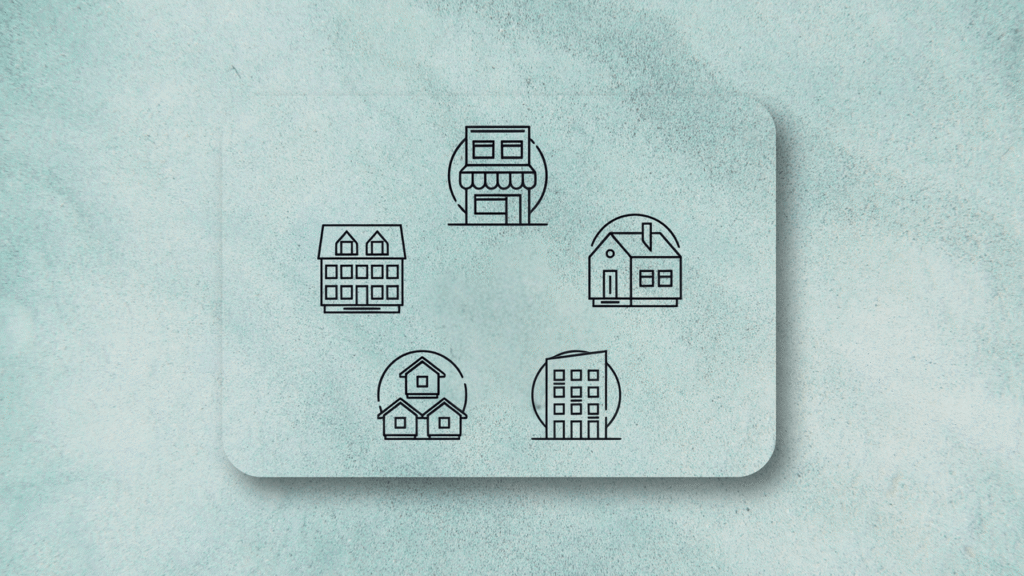
Property Types
Townhouses
The term “townhouse” has become a bit of a catch-all term to refer to any home that shares a building with other units, particularly if there are no other units above or below, but the true explanation of a townhouse is simple. A townhouse is a home that is attached to adjacent houses. Townhouses, also sometimes called row houses, can be built as single or multi-storied structures.
Flats
A flat is an apartment and may have a number of rooms for exclusive use of the person living there. A “flat” can also be one unit in a building comprising several contiguous housing units, as long as it’s one or two stories (a “block of flats”).
Duet Houses
A duet house is a residential building divided into two separate living units that share a common wall, similar to a duplex. Each unit typically has its own entrance, private living spaces, and may include an individual yard or garage. Duet houses are designed to provide the privacy and feel of a single-family home while maximizing land use through shared construction.
Cluster Homes
Cluster homes are a group of single-family houses built close together within a planned community, often arranged around shared open spaces such as courtyards, gardens, or walkways. Each home is typically smaller and situated on a reduced private lot, while residents share access to common amenities maintained through a homeowners’ association. This design maximizes land efficiency and promotes a sense of community while still offering the privacy of individual dwellings.
Residential Properties
Residential properties are buildings or land used primarily for housing and living purposes. They include a wide range of dwelling types such as single-family homes, townhouses, flats, duplexes, cluster homes, and other structures designed for people to reside in. These properties are intended for long-term habitation rather than commercial or industrial use and may be owner-occupied or rented to occupants.
Smallholdings (Size Dependant)
Smallholdings are small parcels of agricultural land used for residential living combined with limited farming or livestock activities. Typically, larger than a standard residential property but smaller than a full-scale farm, smallholdings allow owners to cultivate crops, keep animals, or run small agricultural enterprises. The exact size can vary by region, but the defining feature is that the land is manageable by a household rather than requiring commercial farming operations.
Farm
A farm is a tract of land used primarily for the production of crops, livestock, or other agricultural products on a commercial or large-scale basis. Farms typically include cultivated fields, pastures, and various structures such as barns, sheds, and housing for workers or animals. Unlike smallholdings, which operate on a more limited scale, farms are designed for sustained agricultural output and may employ specialized equipment, labour, and management practices to support ongoing production.
Commercial Properties
Commercial properties are buildings or land used primarily for business activities, including retail, office, industrial, and service-related operations. These properties are designed to generate income through commerce, whether by housing businesses, providing workspace, or hosting customers. Commercial properties can range from small shops and office suites to large warehouses, shopping centres, and business parks, and they are governed by zoning regulations specific to commercial use.
Unacceptable Types of Properties for Residential Lending
- Share Block Scheme
- Unconventional Construction
- Timeshare Unit
- Hotel Suites
- Prefabricated / Movable Structures
- Churches
- Restaurants
1. Home Loan Application
After you have purchased your new home, either you or your estate agent will provide us with an OTP (Offer to Purchase).
2. Interview
One of our experienced consultants will conduct an interview with you to obtain all necessary information that the banks may require.
3. Supporting Documents
You will be asked to supply all the required supporting documents as requested by our consultant.
4. Submission
We will electronically submit your application to the relevant bank/s.
5. Issue Quotation
The bank will issue a quotation detailing the interest rate, costs estimated instalment and other important information for your evaluation and signature.
6. Conveyancing
Once you have signed the quotation the bank will instruct an attorney to handle the bond registration process on their behalf, an appointment will be made with you to sign these registration documents.
7. Lodgement
Once documents have been signed by you, the Attorney will lodge the bond documents at the Deeds Office simultaneously with the documents of the Attorney handling the transfer of the property.
8. Registration
Registration will take place approximately 10 working days following date of lodgement.
Home Loan Application & Registration Process
Steps To Maintaining A Healthy Credit Record
- Keep your regular monthly payments, and make sure the payments are on time.
- If you fall in arrears, get up to date as soon as possible and don’t fall behind again.
- Don’t pay less than the minimum installment each month, so be sure you can afford the installment before applying for the credit.
- To determine whether or not you can afford your repayments, draw up a monthly budget for yourself. The trick is to stick to it and cut out unnecessary expenses if need be.
- Research shows that the average South African spends 75% of his or her after tax income on debt, which doesn’t leave much for anything else. Reduce your debt by paying more than the minimum payment on your accounts. Do it one at a time starting with the most expensive debt (the one with the highest interest rate).
- Aim to reduce the amount of money that goes on debt every month to between 30% and 50% of your after-tax income.
- If you are unable to make a payment due to unforeseen circumstances, talk to the creditor concerned and make alternative arrangements to pay back what you owe. They may well accept reduced monthly payments spread out over a longer repayment period. It is best to pay something every month, if only to show your goodwill and establish a payment record in the event they decide to take legal action against you. It is best to get an agreement in writing stating that they will not take legal action for the period of the repayment arrangement.
- All your effort in paying off your debts will only work if you do not take on more debt. So, when you are tempted to buy something, remind yourself that you are trying to pay off your accounts and that it will be worth it to be patient for a while.
- Some of the above do not apply to a debt for which there is already a judgment listed against you. If you have an old legal debt, you are far worse off if you pay it off through collection attorneys. You will probably pay a lot more than what you should since you will be paying the attorney’s fees as well as the original debt.
- Don’t ignore a letter of demand, since it is often followed by summons from a court. While it can be really tempting to ignore it and hope it goes away, be assured it will only get worse.
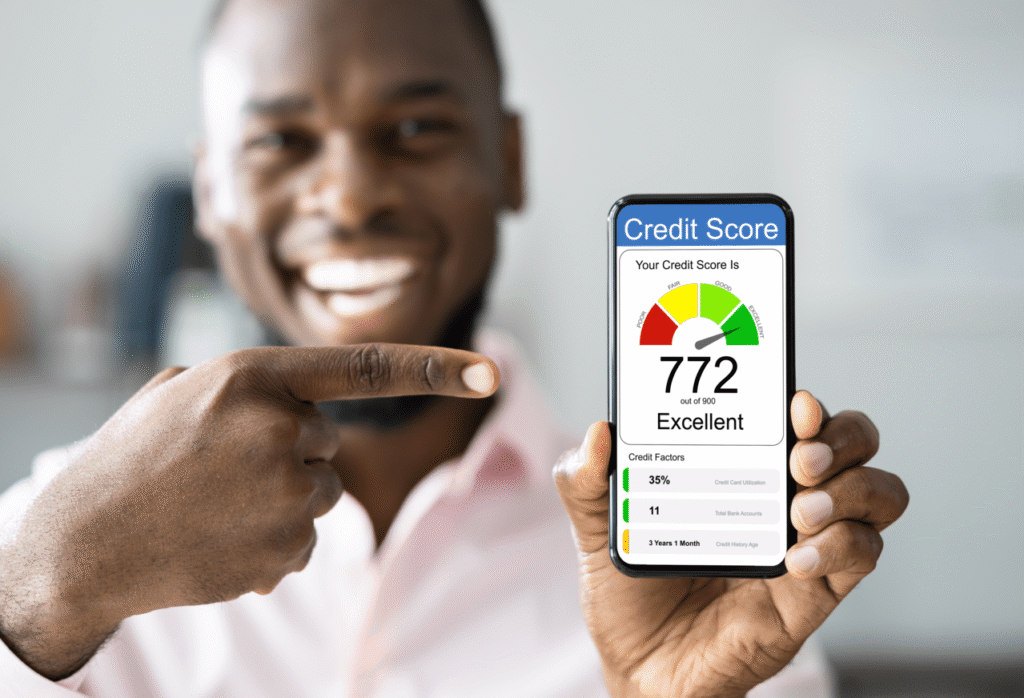
Know Your Credit Profile
What is a credit profile?
A credit profile is the credit history of a consumer, client, or business. It includes personal or company information, records of credit applications, credit accounts, repayment behaviour, and proof of payments. Financial institutions and credit providers use this information to assess risk before granting credit. A credit profile contains both positive and negative information and is not the same as a “blacklist.”
Where is the credit profile kept?
Credit bureaus are companies that safeguard these profiles. A credit bureau can be seen as a library of credit information. They provide the relevant information to financial institutions and credit suppliers which enables them to make accurate and informed decisions.
How do you determine a consumer's creditworthiness?
Credit bureaus and suppliers use a credit grading process to determine the consumer and / or business’ credit worthiness. Credit grading:
Consists of both positive and negative information to predict the consumer’s ability to repay a loan.
Used to determine credit risks and patterns.
Can a consumer request a copy of their credit prfile?
Yes, any consumer has the right to request a copy of his/her credit profile, and to report a discrepancies. The following numbers can be used for this purpose:
(NB – The credit bureau might levy a fee of R25 or more)
Experian (consumer)
0861 105 665
Credit-forum (business)
(011) 777 2700
Micro Lenders Credit Bureau
(MLCB) – 0861 287 328
Transunion ITC (Consumer and business) – 0861 482 482
How to Despute information on a credit profile?
Phone the credit bureau immediately with the relevant information, if any discrepancies are noted.
Always obtain a reference number. If the dispute is not resolved with 30 days, the consumer can contact the Ombudsman for credit information.
Please note that the credit profile is:
Not based on race or religion.
Dynamic and changes every time new information is added.
Useful Contact Details